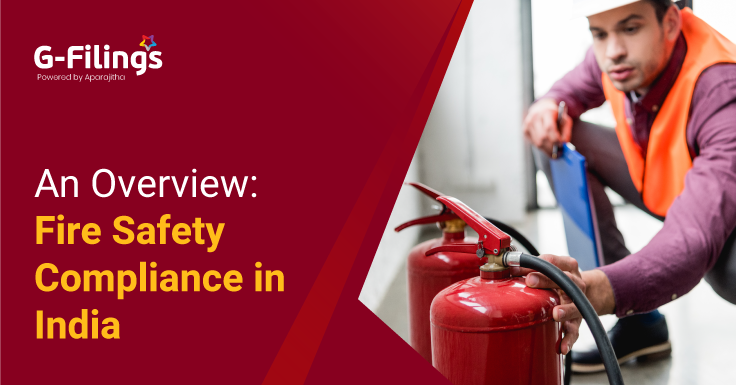
The recent fire accident at a nightclub in Goa highlights critical lapses in the fire safety framework, resulting in the deaths of 25 persons and leaving several others injured. This incident underscores a broader concern, as fire accidents across India are becoming increasingly common amid the rapid growth of commercial establishments, rising urban density, and widespread non-compliance with fire safety compliances. Despite the increasing risk, fire safety often ends up being treated as an afterthought rather than a priority. Fire safety is prioritized below the profits of the business, and unlike other compliances, is complied with sparsely. Every year, India witnesses fire accidents that lead to tragic loss of life, significant property damage, and major disruptions to business operations.
Tragic events such as the Uphaar Cinema fire (Delhi, 1997), the Kumbakonam school fire (Tamil Nadu, 2004), the Surat coaching centre fire (2019), and the Rajkot gaming zone fire (2024) stand as grim reminders of the devastating consequences of inadequate fire safety measures and lax enforcement of regulatory protocols. In continuation of these past incidents, this year, 2025 has also witnessed several fire accidents across India. Some of the fire accidents that took place in 2025 are given below:
| S.No | Incident | Impact | Contravention |
| 1. | Residential Building Fire, Hyderabad, May 2025 | Fire Broke out in multi storey residential building. The fire claimed the lives of 17 people including 8 children
|
The building is an older building, which lacked essential fire safety measures and infrastructure, including fire extinguishers and proper electrical earthing |
| 2. | Chemical Factory Explosion, Telangana, June 2025 | Massive explosion occurred in the spray dryer unit of a chemical factory. The explosion and subsequent fire resulted in the death of approximately 46 people and critically injured 33l others
FIR has been registered against the company management under section 105, 110 and 117 of the Bharatiya Nyaya Sanhita (“BNS”) |
The Telangana Fire Department reported that the factory lacked the required fire safety systems and infrastructure including fire alarms and heat sensors. It was further confirmed that the factory building did not have a valid Fire No Objection Certificate (“NOC”)
|
| 3. | Commercial Complex Fire, New Delhi, August 2025 | A major fire broke out in a commercial complex in Delhi’s, where more than 25 trapped employees were rescued. However significant damage has been made to the property, disrupting business operations | The Delhi Fire Service identified several lapses in the building’s fire safety infrastructure. The office complex lacked basic firefighting equipment, and officials noted that had these measures been in place, the situation could have been contained far more effectively |
| 4. | Office Buildng Fire, Mumbai, October 2025, | A suspected short circuit triggered a fire at a business centre in Mumbai, resulting in a four-hour firefighting operation during which 27 people were evacuated. | The commercial building did not have a valid NOC from the fire department. Its fire safety systems including sprinklers, fire alarms, and fire extinguishers were either not functional or poorly maintained |
A review of these incidents reveals a consistent pattern, there is almost always a lapse in fire safety compliance. In many cases, the owners and occupiers of buildings had not obtained the required Fire NOCs, they had failed to install essential fire safety equipment, or had systems that were installed but not in working condition. Had these establishments been fully compliant with fire safety requirements, several incidents could have been prevented, or at the very least, the severity of damage could have been significantly reduced.
While it is fortunate that, in some cases, individuals who were trapped or injured were successfully rescued, the impact on property remains substantial. The damage caused to buildings and office spaces is severe, leading not only to immediate financial losses but also to disruptions in business operations, resulting in further economic and operational setbacks.
Despite frequent reports of fire accidents and the immense loss they cause, both in terms of human life and property, fire safety is still often viewed merely as a compliance formality. It is high time that residential establishments, commercial establishments, and other establishments recognise that fire safety provisions are not just statutory obligations but essential measures for safeguarding human life and infrastructure. A robust fire safety framework, supported by greater awareness, regular inspections, adoption of modern fire safety and fire prevention systems, and strict accountability, is vital to preventing such incidents and mitigating their impact. As India continues to urbanise at an unprecedented pace, strengthening the culture of compliance, preparedness, and proactive safety management is indispensable.
Regulatory Framework for Fire Safety in India:
“Fire Services” falls under the Twelfth Schedule of the Constitution of India. As per Article 243W, State Governments have the authority to legislate on this subject. Since fire safety is a municipal function, the responsibility to frame laws governing fire and life safety rests with the respective States. Currently, in India, the regulatory framework governing fire and life safety varies significantly across States. In some States, there are dedicated legislations that comprehensively address fire and life safety. In others, only fire service legislations exist (primarily governing administrative aspects of fire service personnel and fire stations). In some States, there is no standalone fire safety legislation, instead fire safety requirements are governed through local municipal Acts/Rules or through broader legislations related to building construction.
The Bureau of Indian Standards (“BIS”) has issued the National Building Code, 2016 (“NBC”). Part 4 of the NBC particularly deals with “Fire and Life Safety”, it contains guidelines and standards on fire prevention, fire protection systems, and life safety requirements for buildings. The provisions of the NBC are formally adopted through State specific fire safety laws or local building bye-laws or any other local legislations, for instance:
* Under Section 13(2) of the Andhra Pradesh Fire Service Act, 1999 – “The Director General, on being satisfied about the provision of fire prevention and safety measures as stipulated in the National Building Code of India as amended from time to time, shall issue a No Objection Certificate…”
* Under Section 3 of the Maharashtra Fire Prevention and Life Safety Measures Act, 2006 – “The owner or occupier shall provide fire prevention and life safety measures as recommended in the respective Fire Safety Approval, which shall not be less than the minimum requirements of fire safety installations prescribed in Part 4 of the National Building Code of India…”
Although the compliances vary across the States, some of the common fire safety related provisions across various States include the following:
* Each State specifies the categories of buildings to which these fire safety provisions apply, particularly high-rise buildings. While many States classify buildings of 15 metres and above as high-rise, this threshold may vary. Additionally, certain buildings classified as “special buildings” under the NBC such as hospitals, schools etc, must comply with fire safety provisions irrespective of height.
* Ensuring fire prevention and life safety measures: Every owner or occupier of a building must ensure that the premises are equipped with fire prevention and life safety measures in accordance with the NBC, and that all such systems are maintained in proper working condition at all times.
* Obtaining a Fire NOC. (Although it is generally referred to as a “No Objection Certificate,” the terminology varies across States. It may be called a fire licence, approval, fire safety certificate, or another equivalent term depending on the applicable State legislation.)
* Fire safety compliance for Occupancy Certificate: In some States, obtaining an Occupancy Certificate requires the owner or occupier to ensure that the building is fully equipped with all prescribed fire prevention and life safety measures.
* Fire Safety measures for Temporary Structures: Certain States mandate obtaining a certificate, licence, or self-declaration to ensure that temporary structures also has adequate fire safety measures as prescribed.
Effect of Non-Compliance:
The legal consequences for failing to comply with the provisions prescribed by a respective State’s legislation may vary depending upon the state, and according to the laws applicable, such as criminal law or fire safety laws. There is a great amount of divergence among the state laws on matter of punishments for violation of fire regulations. Broadly, the penalties may be as follows:
* Fine: A fine of INR 500/- to a fine of INR 50,000/- depending on the State-specific fire safety legislation
* Imprisonment:
• Section 287 of the BNS provides that any person who acts negligently with fire, in a manner endangering human life, will be punishable with imprisonment of up to 6 months or fine of upto INR 2,000.
• Section 105 of the BNS provides that if a person commits culpable homicide not amounting murder (as in cases where a fire accident results in the death of a person), they shall be punished with imprisonment for a term which may extend to 10 years, along with a fine.
* Closure of Establishment: Under Section 152 of the Bharatiya Nagarik Suraksha Sanhita (“BNSS”), a Magistrate empowered by the State Government may issue an order for the closure of an establishment in the event of any public nuisance is caused by a fire on the premises.
Conclusion:
Recurring fire accidents reported each year highlights the significant gap in the enforcement of fire safety measures across States. Although recommendatory documents like the NBC provide comprehensive guidance, effective implementation ultimately depends on the strength of the State level legislation and enforcement mechanisms. It is therefore imperative that States take active steps to bridge this regulatory gap by strengthening their fire safety frameworks and its enforcement. At the same time, owners and occupiers of establishments must cultivate a culture of accountability, preparedness, and proactive compliance, which is essential for safeguarding life and property. Owners and occupiers must move away from the perspective that fire safety compliance is a mere formality, but rather they should start to recognise it as an indispensable responsibility.