
Factory Compliance Services

Who Needs Factory Compliance Services?
Companies factories, warehouses, manufacturing plants, oil refineries, and other industrial facilities require Factory Compliance Services to ensure adherence to safety, environmental, and quality regulations. All manufacturing companies in regulated industries such as pharmaceuticals, chemicals, and electronics, as well as e-commerce & logistics companies managing warehouses, benefit from these essential services.
Our Comprehensive Services
Factory Licenses and Registrations
- Obtain & amend licenses
- Factory license renewal
- Topography Plans & Registration Certificates
Statutory Compliance
- Statutory Registers and Returns
- Display of statutory abstracts & Notices
- Remittance of statutory payments
Incident and Inspection Support
- Support for accident-related compliance
- Support for inspections
Consultation
- Extended support to contractors on a need basis
- Setting up of Statutory Committees like POSH committees
Vendor Compliance
- Regulate entry and exit of contract labourers and amend Principal Employer RC
- Ensure accurate payment to workers
- Preparation & submission of Statutory registers & returns, and PF & ESI Challans

Why Do You Need Factory Compliance Services?
- Compliance with Regulations
- Avoiding Penalties and Fines
- Protecting Reputation
- Mitigating Risk
- Stay updated on changes in laws
Mitigate Compliance Risks through Simpliance’s GRC platform
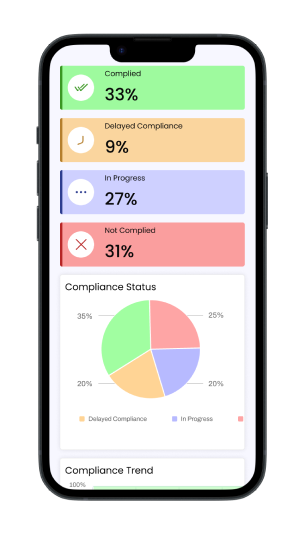
Our services include Simpliance’s Factory Compliance Product suite, designed to:
Track and monitor compliance tasks
Gain real-time insights through reports and dashboards
Manage regulatory changes and eliminate compliance deviations
Track and monitor compliance tasks
Gain real-time insights through reports and dashboards
Manage regulatory changes and eliminate compliance deviations
End-to-end digitalised attendance monitoring system to capture entry, work hours, and exit of contract workers.
A centralised, cloud-based system for contractors and principal employers to track attendance, generate statutory registers, process contractor’s payroll and view reports
End-to-end digitalised attendance monitoring system to capture entry, work hours, and exit of contract workers.
A centralised, cloud-based system for contractors and principal employers to track attendance, generate statutory registers, process contractor’s payroll and view reports
With Simpliance, you can ensure your industrial operations remain compliant effortlessly while gaining a comprehensive overview of your compliance status at all times.
Book a demo today to see how Simpliance can transform your Factory, Governance, Risk, and Compliance management!
Frequently asked questions
Factory compliance refers to ensuring that businesses with warehouses, manufacturing plants, oil refineries, and other industrial facilities adhere to all legal and regulatory standards set by the government. This includes meeting safety, health, environmental, and labour laws to ensure safe working conditions and avoid legal penalties. Maintaining factory compliance is crucial for businesses to operate within legal frameworks.
The Factories Act outlines various compliance requirements for factories, including but not limited to:
- Working Hours: Regulates daily and weekly working hours, overtime, and rest periods.
- Health and Safety: Requires factories to provide safe working conditions, adequate ventilation, lighting, and sanitation.
- Welfare Measures: Mandates provisions for drinking water, canteens, first aid, and crèches.
- Employment of Women and Children: Restricts the employment of women and children and specifies their working conditions.
- Safety Measures: Enforces safety requirements for machinery, hazardous substances, and emergency procedures.
Maintaining Statutory Documents: Requires factories to maintain records of employees, accidents, and inspections.
A factory compliance audit is a systematic review of a factory’s operations to ensure they meet legal and regulatory requirements. This audit assesses compliance with labor laws, safety standards, and statutory requirements. Conducting regular factory compliance audits helps identify potential risks and ensures the factory operates lawfully. The audit involves assessing the effectiveness of compliance measures, identifying non-compliance issues, and recommending corrective actions.
Statutory compliance in a factory refers to the legal obligations that a factory must follow, as outlined by various laws and regulations. This includes ensuring compliance with labor laws, such as minimum wage, working hours, and occupational health and safety standards. Statutory compliance ensures that factories operate within legal guidelines, helping to avoid penalties and legal challenges.
Renewing a factory licence in India ensures your manufacturing unit continues to operate legally under the 4 Labour codes which have subsumed Factories Act, 1948 .
Our end-to-end factory licence renewal support includes:
- Reviewing and organizing all required documentation, including pre-requisite documents like Factory Plan approvals, stability certificates etc
- Preparing and submitting an accurate renewal application to the concerned department
- Coordinating with authorities for inspection or verification, if required
- Tracking the application status until approval
Monitoring renewal timelines to prevent lapses or penalties
Integrating renewal into your recurring compliance framework – so you avoid lapse, penalties or production disruption
Factory Act is now subsumed under the four new labour codes – the Occupational Safety, Health and Working Conditions Code, 2020, Code on Wages, 2019, Industrial Relations Code, 2020, and Code on Social Security, 2020. A factory compliance checklist should primarily cover:
- Health & Safety: mandates like cleanliness, ventilation, machine guarding, fire safety, emergency exits, hazardous process controls etc,.
- Welfare Measures for all genders: For example, canteen, restrooms, creche (where applicable), drinking water, first-aid facilities etc.
- Statutory mandates with respect to working Hours & Wages for example overtime limits, leave with wages, timely wage payment, adherence to minimum wage provisions etc.
- Registration & Licensing requirements like ensuring valid registrations/licences are procured and renewed, maintenance of statutory registers, and timely filing of returns.
- Social Security Compliance: Ensuring mandatory contributions to EPF (Employees’ Provident Fund), ESIC (Employees’ State Insurance), gratuity, and other social security benefits for all eligible workers under the Labour Codes
By following this Factories Act Compliance checklist, manufacturing units can ensure legal compliance, worker protection, and operational continuity under the new labour codes framework.
Under the four new labour codes, factory Act compliance has been consolidated into a unified framework replacing the earlier Factories Act structure.
Maintaining accurate records is a cornerstone of factory-compliance and audit-readiness. Some of the records you should cover are:
- Worker registers: adult workers, leave with wages, overtime etc.
- Health and safety registers: medical exams, accident and dangerous-occurrence reports, inspection logs etc.
- Equipment and process records: machine maintenance, stability certificates, fire & safety equipment logs etc.
- Licence and approval register: factory licence certificate, NOCs (fire, pollution), plan approvals etc.
- Annual returns & statutory filings: labour-department returns, hazards register, audit findings etc.
This is only an indicative list of key compliance areas. Additional requirements may apply depending on the nature of the industry, manufacturing processes, number of workers, hazardous activities involved, and specific State rules notified under the Labour Codes.
Compliance with the Factories Act, now subsumed under the 4 labour codes, encompass all strategic and operational steps a manufacturing unit must take to meet safety, health and welfare standards mandated by Indian laws. They include:
- Obtaining and renewing the factory licence and registrations.
- Adhering to statutory norms for health, safety, working hours, welfare, and hazardous processes.
- Submitting returns, maintaining registers and ensuring compliance with state rules.
- Vendor & contract-labour compliance management – Handling audits, inspections, notices and regulatory interventions proactively.
A factory audit is a systematic evaluation of a manufacturing unit’s compliance with labour laws, safety regulations, and operational standards. It helps businesses identify risks proactively, ensure legal compliance, improve workplace safety, and avoid penalties.
The Industrial Relations Code 2020 governs employer-employee relationships, dispute resolution, trade unions, and layoffs. It impacts factories by standardizing rules for workforce management and improving industrial harmony.
Compliance audit companies assess whether factories adhere to legal and regulatory requirements. They conduct audits, identify gaps, recommend corrective actions, and help businesses maintain continuous compliance.
To outsource factory compliance means partnering with experts to ensure compliance processes are followed, documents maintained and returns filed in a timely manner. This reduces internal workload, ensures accuracy, minimizes risk of penalties, and allows businesses to focus on core operations.
A manufacturing compliance checklist typically includes:
- Labour law compliance
- Safety and EHS standards
- Licensing and registrations
- Employee records and payroll compliance
- Inspection readiness
A factory health and safety checklist includes workplace hazard assessments, fire safety measures, PPE usage, machine safety, emergency preparedness, and employee training compliance.
The Social Security Code 2020 regulates employee benefits such as PF, ESI, gratuity, maternity benefits and others. It ensures social protection for workers across organized and unorganized sectors.
A factory audit should ideally be conducted annually or quarterly, depending on the size and risk level of the factory. Regular audits help maintain compliance and prepare for government inspections.
Non-compliance with labour codes for factories can lead to fines, legal action, business disruption, and reputational damage. Regular audits and compliance support help mitigate these risks.
Compliance audit companies not only ensure legal adherence but also improve operational efficiency by identifying process gaps, enhancing safety practices, and streamlining documentation.