
Vendor Compliance Services

Who Needs Vendor Compliance Services?
Vendor Compliance Services are essential for small and large businesses across various industries including manufacturing, construction, IT, healthcare, and hospitality. These services are particularly critical for companies operating under strict labour laws and regulations related to contract workers. Aparajitha’s Vendor Compliance Services are crafted for all stakeholders, including the principal employer, the contract workforce, and the contractor.
Possible Consequences of Vendor Non-Compliance
- Absorption of the contract labourers
- Payment of arrears of contribution with interest
- Fine/Imprisonment
- Prosecution of the employer or board of directors
Our Comprehensive Services
Vendor Compliance Management
- Ensure Contractor Compliance in Factories, Establishments, and Greenfield & Brownfield project Sites
- Offer customised service models for each category of establishments
Contract Labour Management
- Regulate entry and exit of contract labourers for compliance purposes
- Ensure CLRA (Contract Labour Regulation and Abolition Act) compliance in factories, establishments, and construction sites
Statutory Compliance
- Amendment of Principal Employer Registration Certificates
- Preparation and maintenance of Statutory Registers for each contractor
- Handling inspections & notices
Statutory Returns and Payments
- Submission of Statutory Returns for each contractor
- Ensure EPF/ESI compliance for the contractors
Labour Law Compliance
- Maintenance of records, registers, forms & notices under various legislations
- Ensure minimum wages and timely remittance of ESIC, EPF, and LWF payments
- Coordination support for availing benefits from ESIC & EPT
Additional Compliance Services
- Ensure compliance under BOCW Act and ISMA Act
- Extend accident-related compliance for contract workers
- Facilitate retirement or terminal benefits for contract workers

Why Do You Need Vendor Compliance Services?
- Legal Compliance
- Risk Management
- Cost Savings
- Ethical Responsibility
Mitigate Compliance Risks through Simpliance’s GRC platform
Our services include Simpliance’s Vendor Compliance Product suite, designed to:
Track and monitor Vendor compliance tasks
Gain real-time insights through reports and dashboards
Manage regulatory changes effortlessly
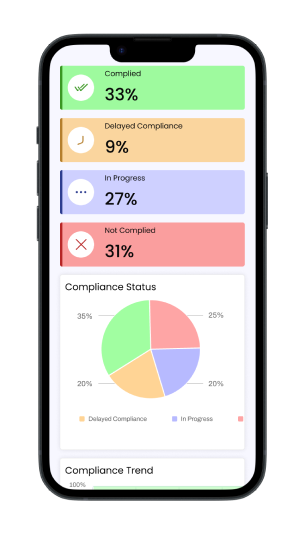
Track and monitor compliance tasks
Gain real-time insights through reports and dashboards
Manage regulatory changes effortlessly
End-to-end digitalised attendance monitoring system to capture entry, work hours, and exit of contract workers
A centralised, cloud-based system for contractors and principal employers to track attendance, generate statutory registers, process contractor’s payroll and view reports
End-to-end digitalised attendance monitoring system to capture entry, work hours, and exit of contract workers
A centralised, cloud-based system for contractors and principal employers to track attendance, generate statutory registers, process contractor’s payroll and view reports
With Simpliance, you can ensure your vendor operations remain compliant effortlessly while gaining a comprehensive overview of your compliance status at all times.
Book a demo today to see how Simpliance can transform your Vendor, Governance, Risk, and Compliance management!
Frequently asked questions
Vendor compliance refers to the adherence of contractors to applicable labour laws & regulations. It ensures that vendors meet the compliance requirements related to quality, safety & ethics, as mentioned by the law. Effective vendor compliance helps companies maintain operational standards, minimize risks, and prevents exposure to penalties imposed on the principal employer
Vendor compliance is crucial for:
- Legal Compliance
- Risk Management
- Cost Savings
- Ethical Responsibility
CLRA compliance refers to adherence to the Contract Labour (Regulation & Abolition) Act, 1970 (CLRA) and its related state-specific rules, which govern the employment of contract labour across India. This is now subsumed into the four new Labour Codes – the Occupational Safety, Health and Working Conditions Code, 2020; the Code on Wages, 2019; the Industrial Relations Code, 2020; and the Code on Social Security, 2020. Even after the implementation of the new codes, CLRA compliance continues to remain a critical obligation for businesses that engage contract workers.
Under this framework, both the principal employer and the contractor must comply with several key obligations, including:
- Registration & Licensing: Registering the establishment and obtaining licences when engaging contract workers above specified thresholds.
- Welfare & Working Conditions: Ensuring contract workers receive mandated amenities – canteen, restrooms, drinking water, and first-aid facilities.
- Fair Wages & Social Security: Guaranteeing minimum wage compliance and social security benefits such as EPF, ESIC, gratuity and others for eligible contract workers.
- Record-Keeping & Returns: Maintaining accurate contract labour records and filing periodic statutory returns on time.
These are among the core requirements – the full compliance scope may vary based on industry, state-specific rules, workforce size, and the nature of contractual arrangements.
Vendor compliance is the process of ensuring that your contractors, third-party vendors and service providers – like 3PL/ TPL etc – strictly adhere to all relevant labour standards. According to our expertise at Aparajitha Corporate Services Pvt Ltd, vendor compliance is vital because:
- It ensures legal compliance by verifying that contractors adhere to compliance obligations like having valid licenses, maintenance of statutory documents, payment of wages as per statutory norms, providing social security benefits etc,.
- It helps mitigate a company’s exposure to risk – contractor non-compliance often exposes the principal employer to liabilities, audits, and regulatory notices.
- It drives cost savings and operational efficiency, as compliant vendors reduce disruptions and support ensure smooth business operations.
- It reinforces ethical responsibility and brand integrity, augmenting your position as a responsible business.
A vendor compliance audit is a systematic evaluation of your supply-chain contractors to assess their adherence to contractual obligations, statutory labour laws (4 labour codes and more), safety regulations and welfare standards. Our vendor compliance audits typically cover:
- Verification of vendor licences (contract labour/ CLRA licence etc)
- Review of vendor records: appointment letters, attendance of contract workers, wages, EPF/ESI payments, statutory registers
- Preparation of an audit report outlining compliance gaps, risk prioritisation and an action plan for remediation
A contract labour management system (CLMS) is a digital platform designed to centralise and automate all compliances pertaining to the contract labour workforce. The benefits we deliver through such a system include:
- Real-time tracking of vendor/contract labour workforce (entry, work hours, exits) with audit-ready records
- Digitised statutory compliance triggers (work hour monitoring, licence renewals, statutory obligations)
- Centralised vendor register and document repository, enabling access to all vendor licences, contracts and audit reports
- Enhanced transparency and reporting, allowing principal employers to monitor vendor performance and compliance status via dashboard analytics
- Reduced administrative burden and errors, ensuring lower risk of non-compliance and stronger supply-chain governance
Contractor compliance refers to the adherence of contractors (and the labour they deploy) with statutory obligations, contractual commitments and workplace standards. Ensuring contractor compliance involves:
- Establishing vendor/contractor onboarding protocols like checking licenses & past compliance history
- Implementing contractor-audit frameworks like regular audits, site inspections, compliance checklists and corrective-action tracking
- Monitoring contractor workforce data like attendance, wages, social security deductions & remittances, and statutory documents
- Leveraging digital tools and dashboards to centralise contractor data, track compliance KPIs and generate real-time reports
- Providing training and awareness programs for contractor leadership and workers to align them with your compliance culture
India’s four new Labour Codes have been implemented but the Rules are yet to be fully notified. In the interim, existing rules under the erstwhile labour laws continue to apply.
Key CLRA compliance requirements include:
- Prohibition on Core Activities: Engagement of contract labour in core activities is prohibited under the new Labour Codes, except in specific permitted circumstances.
- Welfare & Working Conditions: Canteen, restrooms for all genders, drinking water, and first-aid facilities must be provided – the principal employer is primarily responsible for ensuring these amenities.
- Wages & Payment: Fair wages must be paid in line with minimum wage norms, on or before the 7th of the following month, via bank or electronic transfer.
- Social Security: Contract workers must be covered under EPF, ESIC, and other applicable schemes – the principal employer remains liable if the contractor defaults.
- Record-Keeping & Returns: Accurate registers and periodic statutory returns must be maintained and submitted on time by both principal employers and contractors.
- Penalties: Non-compliance attracts fines, imprisonment, and direct liability on the principal employer for contractor lapses.
This is only an indicative list. The full compliance scope may vary based on industry, state rules, workforce size, and nature of contractual arrangements.